
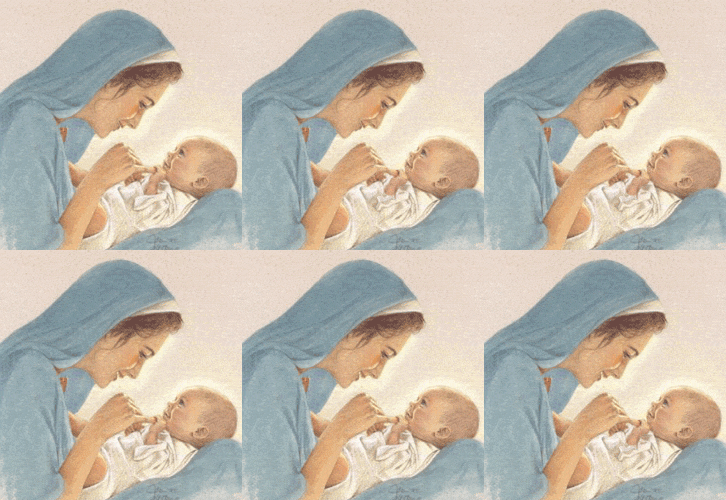
WHAT IS MY CHILD LEARNING THIS MONTH?
This month, we learned about Mary and how she is the Mother of God and Mother of the Church. We discussed why Catholics regard Mary in a special and unique way—not as just a woman who gave birth to Jesus, but she who was conceived without Original Sin and became the Mother of Our Lord and the perfect example of Christian discipleship. We grappled with both the historical, social, and spiritual circumstances of Mary and Joseph when God announced the coming of His Son through Mary and tasking Joseph to take care of His Son and His Mother. In this, we saw the courage and devotion it took for them to say “Yes” to God’s will for their lives, and how their trust in His goodness continued throughout their lives.
We introduced the idea of Marian devotions, certain prayers or practices honoring Mary, and focused primarily on the Rosary as the most popular Marian devotion. We went over the prayers, the Mysteries of the Rosary, and prayed a part of it together.
BRINGING THIS SESSION HOME
This month, parents are asked to go over an important Marian devotion (and the namesake of our parish), Our Lady of Mount Carmel.
Mount Carmel is a coastal mountain range in the Northern part of Israel. The Hebrew name for this place is Har ha Karmell (הַר הַכַּרְמֶל), meaning “God’s vineyard or garden”. The mountain range is made mostly of limestone and known for its lush vegetation. It is also filled with caves where many people, including criminals, sought refuge over the centuries. It is believed that the Prophet Elijah lived on this mountain for some time.
Somewhere between 1189 and 1191, a group of penitent Christian men from Europe came to Mount Carmel and decided to remain there, following the example of the Prophet Elijah and “to live in the footsteps of Jesus Christ.” These men became known as the Carmelite hermits.
As they settled in, they built a chapel in one of the caves dedicated to Mary. Now with Mary, the Mother of Jesus as their Patron, the group became known as the Brothers of St. Mary of Mount Carmel.
In 1247, Pope Innocent V accepted the Carmelites as a religious order for men within the church. They would now be called Carmelite Friars. By this time, the Friars had already left their original home on Mount Carmel. The Saracens, who were reconquering the Holy Land, had driven the Carmelites back into Europe where they flourished. By 1452 a group of women also decided to join the Carmelites, creating an order of nuns.
HOW DID MARY BECOME ASSOCIATED WITH MOUNT CARMEL?
St. Simon Stock, a Carmelite friar, lived in England during the mid 1200’s. He was elected the leader of the Carmelite friars and given the title Superior-General.
On July 16, 1251 during a time when the Carmelite Order was being oppressed, Simon received an apparition of Mary while in Cambridge, England. With this apparition, Mary gave to Simon what is now referred to as the brown scapular.
Mary said to Simon, “Receive my beloved son, this scapular of thy Order, it is a special sign of my favor, which I have obtained for thee and for thy children of Mount Carmel.”
From that time forward, the Carmelite friars refer to Mary as Our Lady of Mount Carmel and have spread word of her apparition to everyone.
That is how Mary received the title, Our Lady of Mount Carmel.
Over the centuries, the Carmelite Orders for both men and women have grown and can be found on just about every continent. Some of their members have been great contributors to Church teaching and have been named Saints within the Church.
Some of the most Prominent Carmelite Saints include:
 |
St. Simon Stock: a significant figure in the history of the Carmelite Order. He began his spiritual journey as a hermit at the age of twelve and later joined the newly established Carmelite Order in England. Under his guidance, the order expanded significantly across southern and western Europe. A pivotal moment in his life occurred on July 16, 1251, when, according to tradition, the Blessed Virgin Mary appeared to him, presenting him with the scapular as a sign of her protection for the Carmelite Order. This event is foundational to the devotion associated with the Brown Scapular, which promises salvation to those who die wearing it. St. Simon Stock's legacy includes his deep veneration for the Virgin Mary. |
 |
St. Teresa of Avila: known for her profound spirituality and reform of the Carmelite Order. At the age of 20, she entered the Carmelite Convent of the Incarnation in Avila, where she took the name Teresa of Jesus. Following her profession in 1536, she faced severe health issues that led her to a deep commitment to mental prayer and contemplation. This period of suffering and spiritual struggle ignited her desire for a more austere and contemplative life, prompting her to seek a return to the primitive rule of the Carmelite Order. On August 24, 1562, Teresa founded the first reformed Carmelite convent, which emphasized a life of prayer and community. Over the next 20 years, she established 17 more convents across Spain, often facing significant opposition but persevering through her faith and determination. Her work was supported by St. John of the Cross, with whom she collaborated to reform the male branch of the order. Teresa's writings, including "The Way of Perfection" and "The Interior Castle," reflect her mystical experiences and insights into prayer and the spiritual life. She emphasized the importance of a personal relationship with Christ and the centrality of prayer in achieving union with God. She was canonized by Pope Gregory XV in 1622. In 1970, she was declared a Doctor of the Church, recognizing her significant contributions to Christian spirituality. |
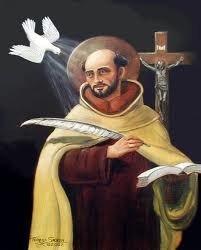 |
St. John of the Cross: a prominent mystic and a key figure in the reform of the Carmelite Order alongside St. Teresa of Jesus. He experienced a challenging childhood marked by poverty after the death of his father, which led his family to Medina del Campo, where he received a basic education and developed a strong spiritual life. In 1563, he joined the Carmelite Order, adopting the name John of St. Matthias. His encounter with St. Teresa in 1567 was pivotal, as she inspired him to support her vision for a reformed Carmelite community dedicated to a more austere and contemplative life. This collaboration led to the establishment of the Discalced Carmelites, with their first house opening in 1568. John's commitment to the reform faced significant opposition, culminating in his imprisonment in 1577 due to conflicts within the Order. He endured harsh conditions but used this time to compose some of his most significant spiritual poetry, including "The Spiritual Canticle." He escaped in 1578 and continued to establish and govern various monasteries across Spain. Throughout his life, John of the Cross wrote extensively on mystical theology, with major works including "The Ascent of Mount Carmel," "The Dark Night of the Soul," and "The Living Flame of Love." His writings explore the soul's journey toward union with God, emphasizing purification and the transformative power of divine love. |
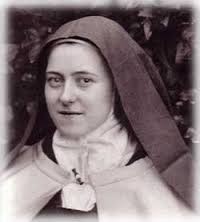 |
St. Therese of The Child Jesus (also known as St. Therese of Lisieux or St. Therese the Little Flower): St. Thérèse of Lisieux was born on January 2, 1873, in Alençon, France. She was the youngest of nine children in a devout family, with both parents, Louis and Zélie Martin, having aspired to religious life. Thérèse's early life was marked by a deep faith nurtured in a loving environment, which led her to feel a strong calling to religious life from a young age. At the age of 15, after overcoming various obstacles, Thérèse entered the Carmelite convent in Lisieux, where two of her sisters were already members. She embraced a life of simplicity and hiddenness, dedicating herself to prayer and the service of God. Her spirituality is characterized by what she termed the "little way," which emphasizes trust in God's love and the importance of performing small acts of kindness with great love. Thérèse's life in the convent was relatively short; she suffered from tuberculosis and died on September 30, 1897, at the age of 24. Despite her brief life, she left a profound impact through her writings, particularly her autobiography, "The Story of a Soul," which was published posthumously and has inspired countless individuals seeking spiritual growth. Her cause for canonization was initiated shortly after her death, and she was beatified in 1923 and canonized in 1925 by Pope Pius XI. In 1997, she was declared a Doctor of the Church by Pope John Paul II, recognizing her significant contributions to spiritual theology and her universal appeal as a model of holiness. |
(Sources: The Catholic Source Book. Brown ROA Publishing, Orlando, FL. 2000, http://ocarm.org/en/content/ocarm/origin, http://www.catholic.org/saints/)
PRAY TOGETHER
This month, we encourage families to pray the rosary together. The Rosary is a meditative prayer based on Scripture. When we pray the Rosary, we ask Mary to pray for us as we seek to grow closer to her son Jesus by contemplating His life, death, and Resurrection.
The rosary has often been referred to as “the spiritual weapon of our times.” It is a powerful prayer that unites global Catholics around the world to pray for conversion and for important intentions around the world. In November 2022, Archbishop Cordileone of San Francisco invited the faithful to pray a “Rosary for Peace” on Election Day. In May 2024, he again called on people to pray the Rosary in the face of wars in different parts of the world.
Watch this video to learn how to pray the rosary together Step-by-Step. Your child should have received a rosary and pamphlet from their class, so I encourage you to follow along using those as well!
How to Pray the Rosary Step by Step | Guided Rosary | Hallow - Catholic Prayer and Meditation App


